Bihar STET Agriculture Unit 2: Agro-Climatic Zones of Bihar, Cropping Pattern and Package of Practices
Agriculture Bihar की economy और rural livelihood का एक महत्वपूर्ण आधार है। राज्य की भौगोलिक स्थिति, fertile alluvial soils, monsoon rainfall, rivers और groundwater resources के कारण यहाँ rice, wheat, maize, pulses, oilseeds, jute, sugarcane, vegetables तथा अनेक horticultural crops उगाए जाते हैं।
लेकिन पूरे बिहार में soil, rainfall, temperature और moisture conditions एक जैसी नहीं हैं। इसी कारण crop selection और cropping pattern भी region के अनुसार बदलता है। Agro-Climatic Zones
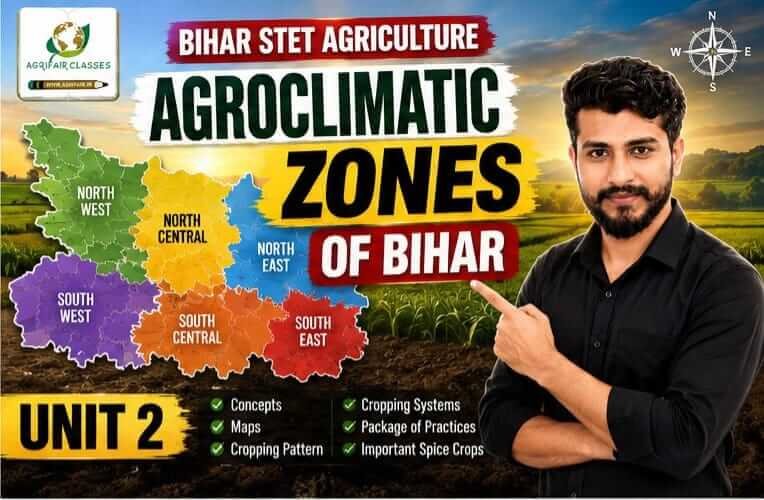
इसी concept को समझने के लिए Bihar को agro-climatic zones में divide किया गया है। Bihar Agriculture Department के वर्तमान classification के अनुसार राज्य में चार प्रमुख agro-climatic zones हैं—Zone I, Zone II, Zone IIIA और Zone IIIB
What is an Agro-Climatic Zones?
Agro-climatic zone वह geographical area है जहाँ climate, rainfall, temperature, soil और other environmental conditions लगभग समान होती हैं और इसलिए वहाँ कुछ particular crops तथा cropping systems अधिक suitable होते हैं।
सरल भाषा में:
Similar climate + similar soil + similar rainfall + similar agricultural conditions = Agro-Climatic Zones
Example
यदि किसी क्षेत्र में:
- rainfall अधिक है,
- soil में moisture अधिक समय तक रहता है,
- flooding की संभावना है,
तो वहाँ ऐसी varieties और crops को prefer किया जाएगा जो excess water को tolerate कर सकें।
इसके विपरीत कम rainfall वाले क्षेत्र में drought-tolerant और short-duration crops/varieties अधिक useful हो सकती हैं।
Agro-Climatic Zones of Bihar
Bihar Agriculture Department के अनुसार बिहार में चार मुख्य Agro-Climatic Zones हैं:
| Zone | Name | Broad Region |
|---|---|---|
| Zone I | North-Western / North Alluvial Plain | North-West Bihar |
| Zone II | North-Eastern Alluvial Plain | North-East Bihar |
| Zone IIIA | South-Eastern Alluvial Plain | South-East Bihar |
| Zone IIIB | South-Western Alluvial Plain | South-West Bihar |
Zone I और Zone II Ganga के north में हैं, जबकि Zone IIIA और IIIB Ganga के south में स्थित हैं। North Bihar के zones सामान्यतः flood-prone हैं, जबकि southern zones में drought risk comparatively अधिक है।
Zone I – North-Western Alluvial Plain
Important Districts
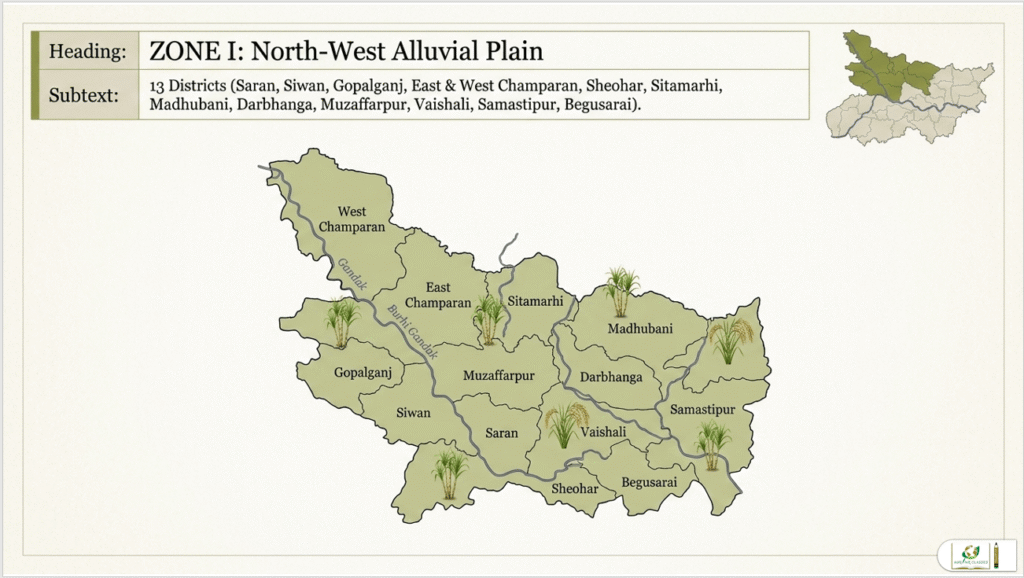
Zone I में प्रमुख रूप से ये districts आते हैं:
- West Champaran
- East Champaran
- Siwan
- Saran
- Sitamarhi
- Sheohar
- Muzaffarpur
- Vaishali
- Madhubani
- Darbhanga
- Samastipur
- Gopalganj
- Begusarai
इस zone की soils mainly sandy loam और loam हैं। Official data के अनुसार rainfall लगभग 1040–1450 mm range में है।
Important Cropping Sequences
Zone I में प्रमुख cropping sequences हैं:
- Rice → Wheat
- Rice → Rai
- Rice → Sweet Potato
- Rice → Rabi Maize
- Maize → Wheat
- Maize → Sweet Potato
- Maize → Rai
- Rice → Lentil
- Rice → Linseed
Exam Point
Zone I = North-West Bihar + flood-prone condition + Rice-Wheat/maize-based systems
Zone II – North-Eastern Alluvial Plain
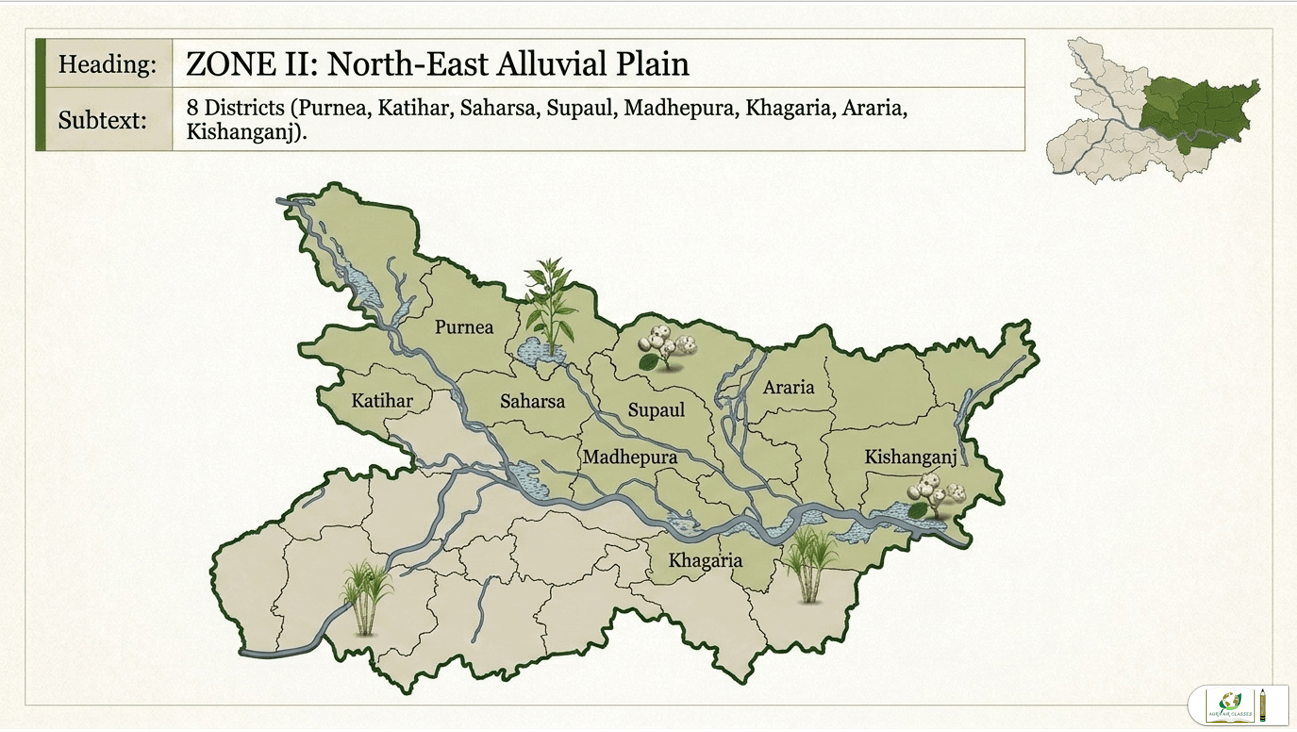
Zone II बिहार के north-eastern part में स्थित है।
Important Districts
- Purnea
- Katihar
- Saharsa
- Supaul
- Madhepura
- Khagaria
- Araria
- Kishanganj
यहाँ soil mainly sandy loam और clay loam होती है और rainfall लगभग 1200–1700 mm तक हो सकती है। इसलिए यह बिहार के relatively high-rainfall zones में आता है।
Major Cropping Sequences
- Jute → Wheat
- Jute → Potato
- Jute → Kalai
- Jute → Mustard
- Rice → Wheat → Moong
- Rice → Toria
Important Point
Zone II में jute-based cropping systems exam perspective से बहुत important हैं।
Zone IIIA – South-Eastern Alluvial Plain
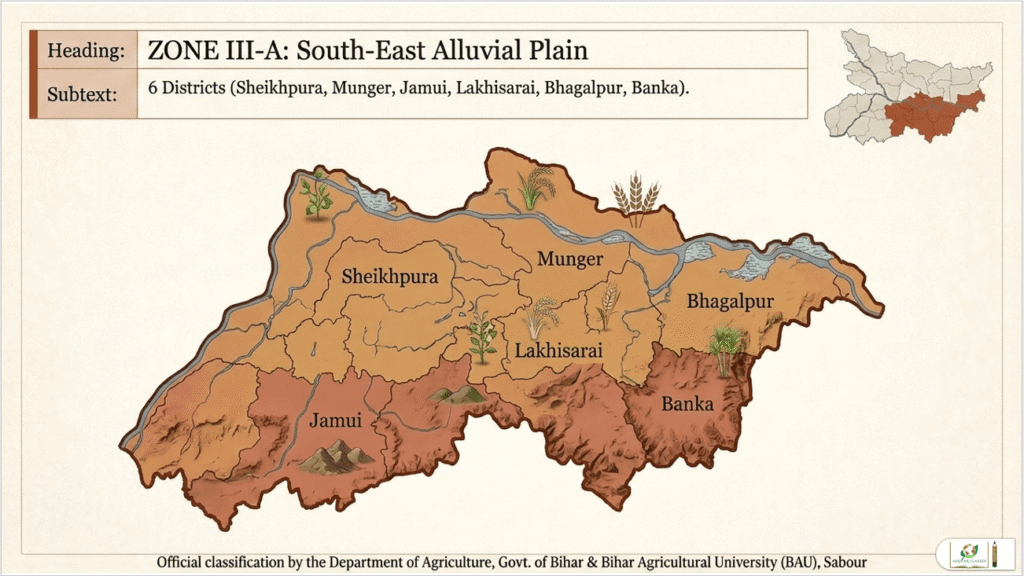
Zone IIIA में प्रमुख districts हैं:
- Sheikhpura
- Munger
- Jamui
- Lakhisarai
- Bhagalpur
- Banka
यह southern Bihar का comparatively important agricultural region है।
यहाँ rice, wheat, pulses और oilseeds जैसी crops महत्वपूर्ण हैं।
Zone IIIB – South-Western Alluvial Plain
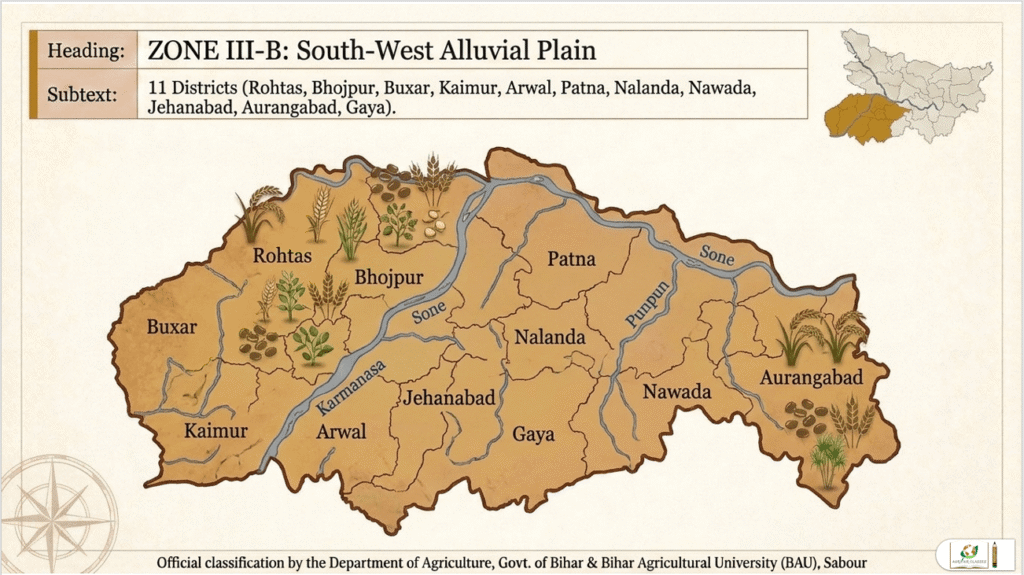
Zone IIIB में प्रमुख districts हैं:
- Rohtas
- Bhojpur
- Buxar
- Bhabhua/Kaimur
- Arwal
- Patna
- Nalanda
- Nawada
- Jehanabad
- Aurangabad
- Gaya
Southern Bihar में rainfall north Bihar की तुलना में generally कम होती है और drought risk महत्वपूर्ण agricultural constraint हो सकता है।
North Bihar vs South Bihar Agro-Climatic Zones
| Feature | North Bihar | South Bihar |
|---|---|---|
| Location | North of Ganga | South of Ganga |
| Major Risk | Flood | Drought |
| Important Crops | Rice, maize, jute, wheat | Rice, wheat, pulses, oilseeds |
| Rainfall | Generally higher | Generally lower |
| Important System | Rice-Wheat, Jute-Wheat | Rice-Wheat, Rice-Pulse |
| Crop Planning | Drainage/flood consideration | Moisture conservation important |
इस comparison को Bihar STET में Agro-Climatic Zones conceptual MCQ के रूप में पूछा जा सकता है।
Visit our Youtube Channel Agrifair Classes for more Videos.
HYV = High Yielding Variety
High-yielding और short-duration varieties ने Bihar के cropping pattern में महत्वपूर्ण बदलाव किए हैं।
पहले अगर एक crop को mature होने में ज्यादा समय लगता था, तो उसके बाद दूसरी crop की sowing में delay होता था।
लेकिन short-duration variety जल्दी mature हो जाती है।
Example
मान लीजिए:
Traditional Rice → 140–150 days
इसके कारण wheat की sowing late हो सकती है।
यदि farmer:
Short-duration Rice → approximately 100–120 days
का suitable variety use करता है, तो rice जल्दी harvest होकर wheat या maize की timely sowing संभव हो सकती है।
ICAR ने भी Bihar के context में short-duration varieties और timely crop establishment को succeeding rabi crops की timely sowing से जोड़ा है। Agro-Climatic Zones
इससे:
- cropping intensity बढ़ती है
- multiple cropping संभव होती है
- land-use efficiency बढ़ती है
- annual production बढ़ सकती है
- farmer income improve हो सकती है
Important Crops – Scientific Name, Family and Order
यह section Bihar STET Agriculture के लिए बहुत important है।
| Crop | Scientific Name | Family | Order |
|---|---|---|---|
| Rice | Oryza sativa | Poaceae | Poales |
| Wheat | Triticum aestivum | Poaceae | Poales |
| Maize | Zea mays | Poaceae | Poales |
| Barley | Hordeum vulgare | Poaceae | Poales |
| Chickpea/Gram | Cicer arietinum | Fabaceae | Fabales |
| Lentil | Lens culinaris | Fabaceae | Fabales |
| Pigeonpea/Arhar | Cajanus cajan | Fabaceae | Fabales |
| Green gram/Mung | Vigna radiata | Fabaceae | Fabales |
| Black gram/Urd | Vigna mungo | Fabaceae | Fabales |
| Mustard | Brassica juncea | Brassicaceae | Brassicales |
| Linseed | Linum usitatissimum | Linaceae | Malpighiales |
| Sesame | Sesamum indicum | Pedaliaceae | Lamiales |
| Groundnut | Arachis hypogaea | Fabaceae | Fabales |
| Jute | Corchorus olitorius | Malvaceae | Malvales |
| Sugarcane | Saccharum officinarum | Poaceae | Poales |
| Cotton | Gossypium spp. | Malvaceae | Malvales |
| Potato | Solanum tuberosum | Solanaceae | Solanales |
| Chilli | Capsicum annuum | Solanaceae | Solanales |
| Ginger | Zingiber officinale | Zingiberaceae | Zingiberales |
| Turmeric | Curcuma longa | Zingiberaceae | Zingiberales |
| Coriander | Coriandrum sativum | Apiaceae | Apiales |
Exam Tip: Scientific name + family + season + important variety को एक साथ याद करना ज्यादा effective है।
Package of Practices – Meaning
Package of Practices (PoP) का अर्थ है किसी crop की successful production के लिए recommended agricultural practices का पूरा set.
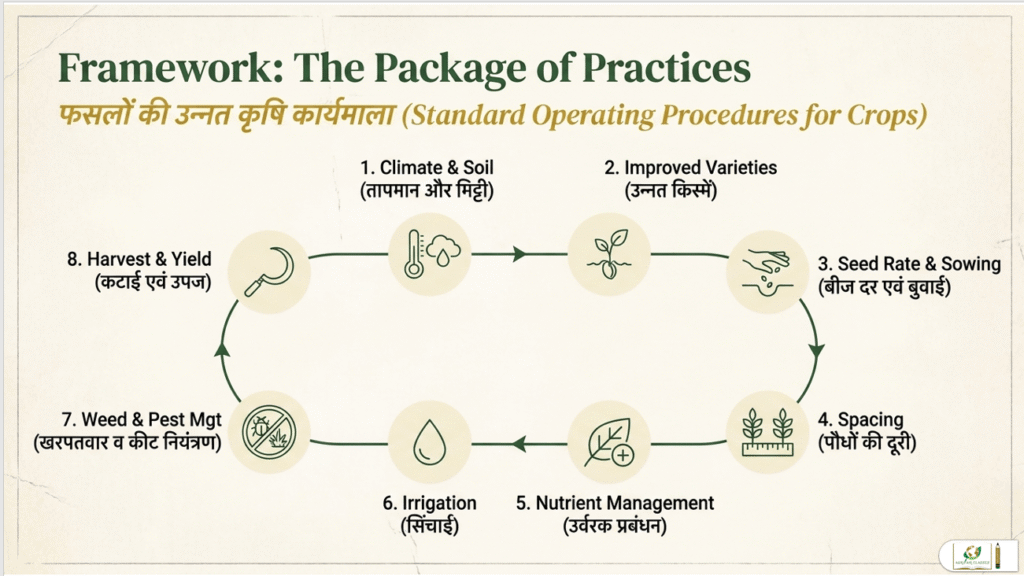
इसमें generally शामिल होते हैं:
- Suitable variety
- Land preparation
- Seed selection
- Seed treatment
- Sowing/transplanting time
- Seed rate
- Spacing
- Nutrient management
- Irrigation
- Weed management
- Pest management
- Disease management
- Harvesting
- Post-harvest management
Bihar Agricultural University भी Agro-Climatic Zones crop-specific recommended package of practices और agronomic technologies को promote करता है।
Package of Practices of Rice
Basic Information
Scientific name: Oryza sativa
Family: Poaceae
Order: Poales
Season: Mainly Kharif
Important Bihar Varieties
कुछ important varieties/examples:
- Rajendra Mahsuri
- Rajendra Sweta
- Rajendra Bhagwati
- Rajendra Subasini
- Sabour Surbhit
- Sabour Ardhajal
- Sabour Deep
- Sabour Shree
- Swarna
- Swarna Sub-1
Bihar-specific rice varieties में Sabour Agricultural University द्वारा विकसित varieties भी महत्वपूर्ण हैं।
Package
Land preparation: अच्छी puddling और level field transplanting के लिए useful है।
Nursery: Healthy seed से nursery तैयार की जाती है।
Transplanting: Suitable age के healthy seedlings को puddled field में transplant किया जाता है।
Nutrient management: Nitrogen, phosphorus और potassium की requirement soil test तथा recommended package के अनुसार manage करनी चाहिए।
Water management: Rice में लगातार बहुत deep standing water रखना हमेशा आवश्यक नहीं होता। Field और crop stage के अनुसार irrigation/water management किया जाता है।
Weed management: Early crop stage में weed competition कम करना जरूरी है।
Harvesting: जब crop maturity पर पहुँचती है और grains appropriate maturity दिखाते हैं, तब harvesting की जाती है।
Flood-prone Bihar Example
Flood-prone areas में suitable flood/submergence-tolerant varieties का selection महत्वपूर्ण है। ICAR ने Bihar के लिए Rajendra Mahsuri, Rajendra Sweta, Swarna तथा Swarna Sub-1 जैसी varieties का उल्लेख किया है।
Package of Practices of Wheat
Basic Information
Scientific name: Triticum aestivum
Family: Poaceae
Order: Poales
Season: Rabi
Important Varieties
Bihar में historically recommended/improved varieties में:
- K 0307
- HD 2733
- HD 2824
- HUW 468
- K 9107
- NW 1012
जैसी varieties का ICAR Bihar profile में उल्लेख मिलता है।
Bihar Agricultural University ने Sabour Shreshtha, Sabour Nirjal और Sabour Samridhi जैसी wheat varieties भी विकसित की हैं।
Package
- Timely land preparation
- Quality certified seed
- Proper seed treatment
- Timely sowing
- Line sowing
- Balanced fertilizer application
- Critical stages पर irrigation
- Weed management
- Disease monitoring
- Timely harvesting
Bihar-specific point
Rice harvest के बाद wheat की timely sowing बहुत important है। यही कारण है कि rice variety selection और rice-wheat cropping system एक-दूसरे से closely connected हैं।
Package of Practices of Maize
Scientific name: Zea mays
Family: Poaceae
Order: Poales
Maize Bihar की महत्वपूर्ण cereal crops में से एक है। Bihar में Rabi/winter maize भी बहुत महत्वपूर्ण है।
Important Varieties/Hybrids
- DHM-117
- Shaktiman series
- Suitable regional hybrids/composites
Bihar Agricultural University के research profile में DHM-117 maize hybrid का उल्लेख मिलता है।
Package
- Well-prepared and well-drained field
- Quality seed
- Proper spacing
- Balanced nutrient management
- Adequate moisture
- Early weed control
- Pest and disease monitoring
- Timely harvesting
Package of Practices of Chickpea/Gram
Scientific name: Cicer arietinum
Family: Fabaceae
Order: Fabales
Season: Rabi
Important Varieties
Examples:
- Pusa 372
- JG 11
- BG series
- Suitable regional varieties
Package
- Well-drained soil
- Timely sowing
- Healthy treated seed
- Moderate irrigation requirement
- Weed-free initial growth
- Balanced phosphorus nutrition
- Avoid unnecessary excess irrigation
- Monitor pod borer and diseases
Package of Practices of Lentil
Scientific name: Lens culinaris
Family: Fabaceae
Order: Fabales
Season: Rabi
Lentil Bihar के rice-based cropping systems में महत्वपूर्ण pulse है।
Example
Rice → Lentil
यह Bihar के official cropping sequences में भी शामिल है।
Package
- Fine seedbed
- Timely sowing
- Quality seed
- Seed treatment
- Proper plant population
- Limited irrigation depending on soil moisture
- Weed control
- Disease/pest monitoring
- Timely harvesting
Package of Practices of Mustard
Scientific name: Brassica juncea
Family: Brassicaceae
Order: Brassicales
Season: Rabi
Important Varieties
Examples:
- Pusa Bold
- Varuna
- Pusa Jai Kisan
- RAUTS-17
Bihar Agricultural University contingency recommendations में Pusa Mahak और RAU TS-17 जैसे mustard varieties का उल्लेख मिलता है।
Package
- Fine and well-prepared seedbed
- Timely sowing
- Proper seed rate
- Line sowing
- Balanced NPK and sulphur management
- Moisture management
- Weed control
- Monitoring of aphid and diseases
- Timely harvesting
Package of Practices of Jute
Scientific name: Corchorus olitorius
Family: Malvaceae
Order: Malvales
Season: Kharif
Jute विशेष रूप से North-Eastern Bihar में important commercial/fibre crop है।
Important Varieties
Examples:
- JRO 524
- JRO 204
- JRC 321
Package
- Fine seedbed preparation
- Timely sowing
- Proper seed rate
- Thinning to maintain plant population
- Weed management
- Adequate moisture
- Harvest at appropriate fibre maturity
- Retting after harvest
Package of Practices of Sugarcane
Scientific name: Saccharum officinarum
Family: Poaceae
Order: Poales
Important Varieties
Examples:
- Co 0238
- CoP 9301
- CoSe series
Package
- Healthy disease-free setts
- Proper sett treatment
- Suitable planting method
- Adequate soil moisture
- Balanced nutrient management
- Earthing-up
- Weed control
- Pest and disease monitoring
- Timely harvesting
Sugarcane Bihar की important commercial crops में शामिल है। Bihar Agriculture Department भी sugarcane को राज्य की प्रमुख crops में गिनाता है।
Important Spice Crops of Bihar
Bihar STET Unit II Agro-Climatic Zones में चार spices explicitly important हैं:
- Chilli
- Ginger
- Turmeric
- Coriander
Chilli
Scientific name: Capsicum annuum
Family: Solanaceae
Order: Solanales
Important varieties
- Pusa Jwala
- Pant C-1
- Kashi Anmol
Production Practices
- Nursery raising
- Healthy seedlings
- Well-drained soil
- Transplanting at suitable stage
- Balanced fertilizers
- Regular irrigation according to soil and weather
- Weed management
- Pest/disease monitoring
- Harvesting of green or mature fruits according to purpose
Ginger
Scientific name: Zingiber officinale
Family: Zingiberaceae
Order: Zingiberales
Propagation
Ginger is generally propagated through rhizomes.
Important varieties
- Rio-de-Janeiro
- Nadia
- IISR varieties
Package
- Well-drained fertile soil
- Healthy rhizomes
- Proper planting
- Mulching
- Adequate moisture
- Drainage during heavy rainfall
- Weed management
- Harvest at appropriate maturity
Turmeric
Scientific name: Curcuma longa
Family: Zingiberaceae
Order: Zingiberales
Propagation
Rhizomes
Important varieties
- Rajendra Sonia
- Lakadong
- Prathibha
Package
- Well-drained soil
- Healthy rhizomes
- Proper planting
- Mulching
- Nutrient management
- Weed management
- Proper irrigation
- Harvest after foliage dries/matures
Coriander
Scientific name: Coriandrum sativum
Family: Apiaceae
Order: Apiales
Important varieties
- Pant Haritma
- CO-1
- RCr series
Package
- Well-prepared seedbed
- Healthy seed
- Proper sowing
- Light irrigation as required
- Weed management
- Balanced nutrition
- Harvest according to leaf/seed purpose
Multiple Cropping
जब एक ही agricultural land पर एक year में एक से अधिक crops grow की जाती हैं, उसे multiple cropping कहते हैं।
Example
Rice → Wheat → Moong
Bihar Agriculture Department के official cropping pattern में Zone II के लिए Rice-Wheat-Moong sequence दिया गया है।
Advantages
- Cropping intensity बढ़ती है
- Land utilization बढ़ता है
- Food production बढ़ती है
- Farmer income improve हो सकती है
- Resources का better utilization होता है
Mixed Cropping
जब दो या दो से अधिक crops को एक ही field में बिना definite row arrangement के साथ-साथ उगाया जाता है, उसे mixed cropping कहते हैं।
Example
Wheat + Mustard
इसका primary उद्देश्य production risk को कम करना और available resources का better utilization करना होता है।
Intercropping
Intercropping में दो या अधिक crops को एक साथ इस प्रकार grow किया जाता है कि उनका row arrangement relatively definite होता है।
Example
Maize + Cowpea
यह system:
- land use efficiency बढ़ा सकता है
- resource utilization improve करता है
- risk diversification में मदद करता है
Relay Cropping
Relay cropping में पहली crop पूरी तरह harvest होने से पहले दूसरी crop की sowing कर दी जाती है।
Example
Rice harvest के आसपास succeeding pulse की establishment करना इसका conceptual example है।
इसका major advantage है कि between-crop fallow period कम हो सकता है।
Also Read this: Bihar STET Agriculture Unit 1 – Ecology and its relevance to man
Important Cropping Systems for Bihar STET
| Cropping System | Important Region/Context |
|---|---|
| Rice → Wheat | Bihar widely important |
| Rice → Lentil | North/South Bihar |
| Rice → Gram | South Bihar |
| Rice → Rai | Bihar |
| Rice → Toria | North-East Bihar |
| Jute → Wheat | Zone II |
| Jute → Potato | Zone II |
| Rice → Wheat → Moong | Zone II |
| Maize → Wheat | Zone I |
ये sequences Bihar Agriculture Department के official cropping-pattern information से लिए गए हैं।
Most Important Crop–Variety Revision Table
| Crop | Important Variety Examples |
|---|---|
| Rice | Rajendra Mahsuri, Rajendra Sweta, Swarna, Swarna Sub-1, Sabour Surbhit |
| Wheat | K 0307, HD 2733, HUW 468, NW 1012, Sabour Samridhi |
| Maize | DHM-117, Shaktiman series |
| Chickpea | JG 11, Pusa 372 |
| Lentil | PL series, K-75 |
| Mustard | Pusa Bold, Varuna, RAUTS-17 |
| Jute | JRO 524, JRO 204, JRC 321 |
| Sugarcane | Co 0238, CoP series |
| Chilli | Pusa Jwala, Pant C-1, Kashi Anmol |
| Ginger | Nadia, Rio-de-Janeiro |
| Turmeric | Rajendra Sonia, Lakadong, Prathibha |
| Coriander | Pant Haritma, CO-1 |
Important: Variety recommendations can vary by agro-ecology, release status and updated university/state recommendations. इसलिए actual cultivation के लिए latest local recommendation को priority देना चाहिए। Bihar Agricultural University और ICAR की current variety information को exam preparation में reference के रूप में देखना बेहतर है।
Bihar STET Agriculture Unit 2 Agro-Climatic Zones – Quick Revision
1. Bihar has how many main agro-climatic zones?
Four
2. Which zones are north of Ganga?
Zone I and Zone II
3. Which zones are south of Ganga?
Zone IIIA and Zone IIIB
4. North Bihar is mainly associated with?
Flood risk
5. South Bihar is mainly associated with?
Drought risk
6. Major cropping system of Bihar?
Rice-Wheat
7. Important Zone II commercial crop?
Jute
8. Important spice crops mentioned in Bihar STET?
Chilli, Ginger, Turmeric and Coriander
9. Scientific name of rice?
Oryza sativa
10. Scientific name of wheat?
Triticum aestivum
11. Scientific name of maize?
Zea mays
12. Scientific name of mustard?
Brassica juncea
13. Scientific name of lentil?
Lens culinaris
14. Scientific name of chilli?
Capsicum annuum
15. Scientific name of ginger?
Zingiber officinale
Why Package of Practices is Important?
किसी crop की सिर्फ variety जानना sufficient नहीं है। High-yielding variety भी तभी अच्छा perform करेगी जब उसके लिए suitable:
- soil
- sowing time
- seed rate
- spacing
- fertilizer
- irrigation
- weed management
- pest management
- disease management
का पालन किया जाए।
इसीलिए Package of Practices को crop production technology का complete production guide माना जा सकता है।
Bihar Agricultural University ने rice-wheat system, dry direct-seeded rice, zero-tillage wheat, lentil conservation tillage और nutrient management जैसी agronomic technologies पर भी काम किया है।
Conclusion
Bihar STET Agriculture Unit 2 केवल Bihar के Agro-Climatic Zones याद करने का topic नहीं है। यह पूरा unit Bihar की agricultural geography को crop production से जोड़ता है।
सबसे पहले हमें समझना चाहिए कि बिहार में चार agro-climatic zones हैं। North Bihar के Zone I और II में flood-related conditions महत्वपूर्ण हैं, जबकि South Bihar के IIIA और IIIB में moisture limitation और drought risk comparatively महत्वपूर्ण हो सकते हैं। इसके कारण crop selection और cropping pattern region के अनुसार बदलता है।
इसके बाद HYV और short-duration varieties का role समझना जरूरी है, क्योंकि कम duration वाली varieties succeeding crops की timely sowing में मदद कर सकती हैं और cropping intensity बढ़ाने का अवसर देती हैं।
इसी तरह multiple cropping, mixed cropping, intercropping और relay cropping को examples के साथ समझना चाहिए।
और सबसे important हिस्सा है Package of Practices, जिसमें scientific name, family, order, variety, sowing, seed rate, spacing, nutrient management, irrigation, weed management, pest/disease management और harvesting जैसी बातें आती हैं।
Bihar STET की तैयारी करते समय केवल theory पढ़ने के बजाय Crop + Scientific Name + Family + Order + Season + Variety + Package of Practices + Cropping System को एक साथ revise करना सबसे effective approach रहेगा।
Must Check Free books
Frequently Asked Questions – FAQ
How many agro-climatic zones are there in Bihar?
Bihar Agriculture Department के current classification के अनुसार बिहार में four main agro-climatic zones हैं—Zone I, Zone II, Zone IIIA और Zone IIIB.
Which Agro-Climatic Zones are located north of the Ganga?
Zone I and Zone II Ganga के north में स्थित हैं।
Which agro-climatic zones are located south of the Ganga?
Zone IIIA and Zone IIIB South Bihar में स्थित हैं।
Which is the major cropping system in Bihar?
Rice-Wheat Bihar का प्रमुख cropping system है। Agriculture Department के अनुसार rice-wheat system gross cropped area का बड़ा हिस्सा cover करता है।
What are the important spice crops of Bihar for Bihar STET?
Bihar STET Unit II में chilli, ginger, turmeric और coriander specifically mentioned हैं।
What is the difference between mixed cropping and intercropping?
What is the difference between mixed cropping and intercropping?
Why are short-duration varieties important?
Short-duration varieties crop maturity जल्दी complete कर सकती हैं, जिससे succeeding crop की timely sowing और higher cropping intensity में मदद मिल सकती है। Bihar के rice-based systems में यह विशेष रूप से महत्वपूर्ण है।




It’s so Helpful for Bihar STET Aspirants