Complete Farmers Classification in India Based on Land Holding (2026) | Easy Guide to Types of Farmers 🌱
🌱 Introduction
India एक Agriculture-based country है, जहाँ लगभग आधी से अधिक population किसी न किसी रूप में agriculture पर depend करती है। Agriculture sector देश की economy, food security और rural development में महत्वपूर्ण भूमिका निभाता है। लेकिन सभी किसानों के पास समान मात्रा में खेती योग्य भूमि (Agricultural Land) नहीं होती। इसी कारण भारत सरकार किसानों को उनकी Land Holding (जोत का आकार) के आधार पर अलग-अलग categories में classify करती है। Farmers Classification in India
अगर आप Class 12 Agriculture, ICAR UG, CUET Agriculture, B.Sc. Agriculture, Agriculture Diploma या किसी भी Agriculture Competitive Exam की तैयारी कर रहे हैं, तो Farmers Classification in India एक बहुत ही important topic है। इस topic से MCQs, One-Liner Questions और Short Notes अक्सर exams में पूछे जाते हैं।
इस article में आप जानेंगे:
- ✅ Farmers Classification क्या होता है?
- ✅ Types of Farmers in India
- ✅ Land Holding Classification Table
- ✅ Marginal, Small, Medium और Large Farmer में अंतर
- ✅ Government Schemes से इसका क्या relation है?
- ✅ Exam Important Points
- ✅ FAQs
यह article simple Hinglish language में लिखा गया है ताकि students आसानी से concepts समझ सकें।
📖 What is Farmers Classification? (Farmers Classification क्या है?)
Farmers Classification का मतलब है किसानों को उनकी Agricultural Land Holding के आधार पर अलग-अलग categories में divide करना।
सरल भाषा में कहें तो, किसान के पास जितनी खेती योग्य जमीन होती है, उसी के आधार पर यह तय किया जाता है कि वह Landless Farmer, Marginal Farmer, Small Farmer, Semi-Medium Farmer, Medium Farmer या Large Farmer है।
इस classification का उपयोग Government कई महत्वपूर्ण कार्यों के लिए करती है, जैसे:
- Agriculture Subsidy देना
- Crop Insurance योजनाओं का लाभ देना
- Kisan Credit Card (KCC)
- PM-KISAN जैसी योजनाओं के beneficiaries तय करना
- Agriculture Census और Policy Planning
🌾 Why is Farmers Classification Important? (Farmers Classification क्यों जरूरी है?)
Farmers Classification in India केवल exam point of view से ही नहीं बल्कि practical agriculture में भी बहुत महत्वपूर्ण है।
इसके मुख्य उद्देश्य हैं:
- Government Schemes का सही लाभ सही किसानों तक पहुँचाना।
- Subsidy और Financial Assistance देना।
- Agriculture Loan और Crop Insurance उपलब्ध कराना।
- किसानों की आर्थिक स्थिति का आकलन करना।
- Agricultural Development Programs बनाना।
- Rural Development को बढ़ावा देना।
यही कारण है कि Agriculture Students और Competitive Exam Aspirants को यह topic अच्छी तरह याद होना चाहिए।
🌱 Types of Farmers in India Based on Land Holding
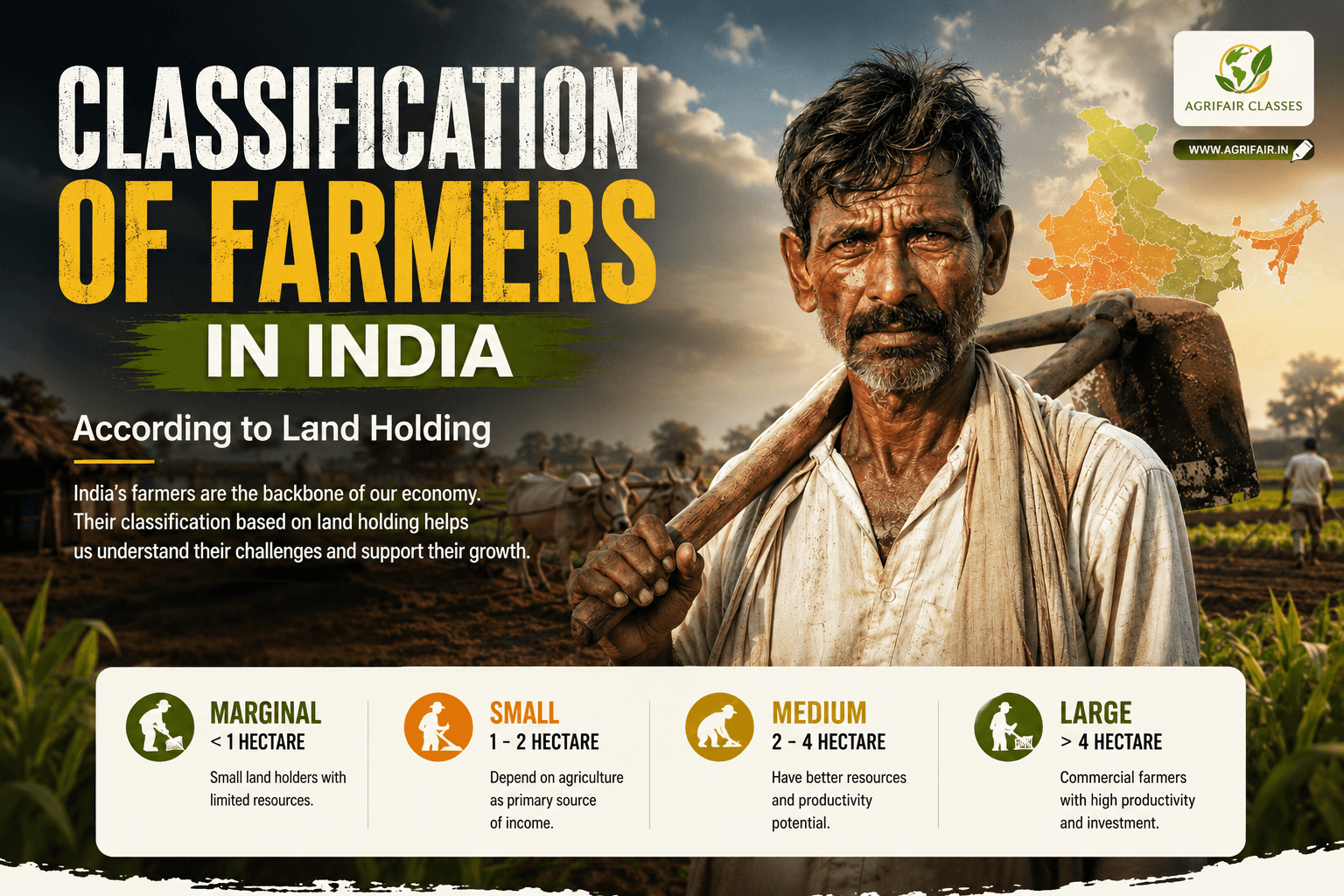
भारत में Land Holding के आधार पर किसानों को 6 Categories में divide किया गया है।
| Farmer Category | Land Holding |
|---|---|
| Landless Farmer | No Agricultural Land |
| Marginal Farmer | Up to 1 Hectare |
| Small Farmer | 1–2 Hectares |
| Semi-Medium Farmer | 2–4 Hectares |
| Medium Farmer | 4–10 Hectares* |
| Large Farmer | More than 10 Hectares* |
Note: कुछ State Boards या पुराने Agriculture Notes में Medium Farmer = 4–6 Hectares और Large Farmer = More than 6 Hectares भी दिया जाता है। इसलिए exam में हमेशा अपने syllabus के अनुसार answer लिखें।
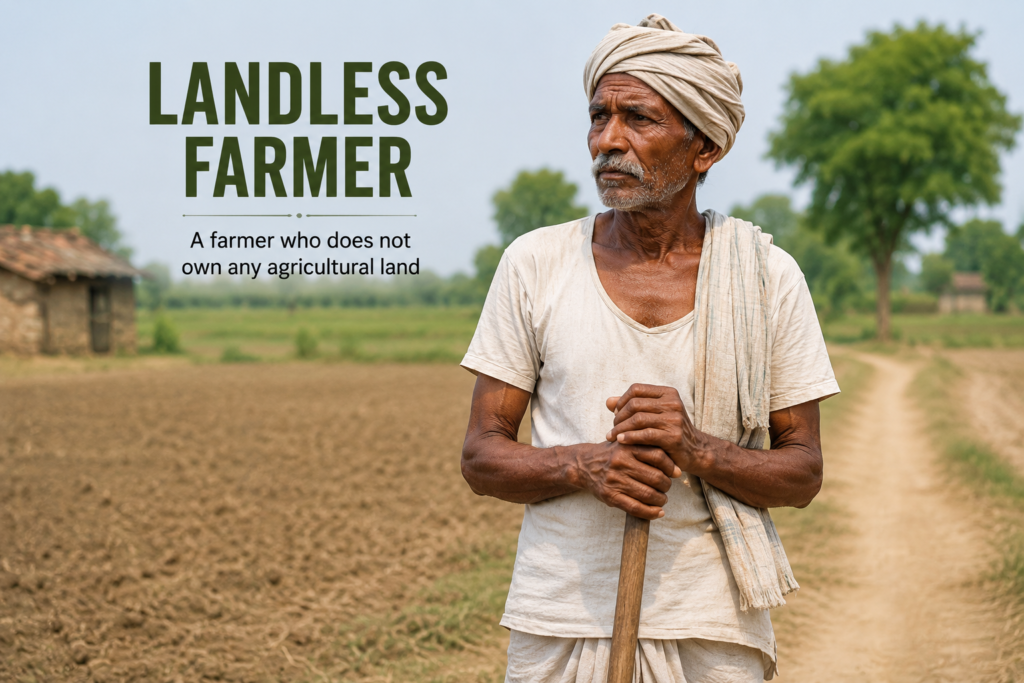
1. Landless Farmer (Landless या No Land Farmer)
Land Holding:
No Agricultural Land
Landless Farmer ऐसे किसान होते हैं जिनके पास अपनी खेती योग्य जमीन नहीं होती। ये किसान दूसरे किसानों की जमीन पर मजदूरी करते हैं या Lease (पट्टे) पर खेती करते हैं।
Key Features
- अपनी Agricultural Land नहीं होती।
- Daily Wage या Farm Labour के रूप में काम करते हैं।
- Income सीमित होती है।
- Government Welfare Schemes पर अधिक निर्भर रहते हैं।
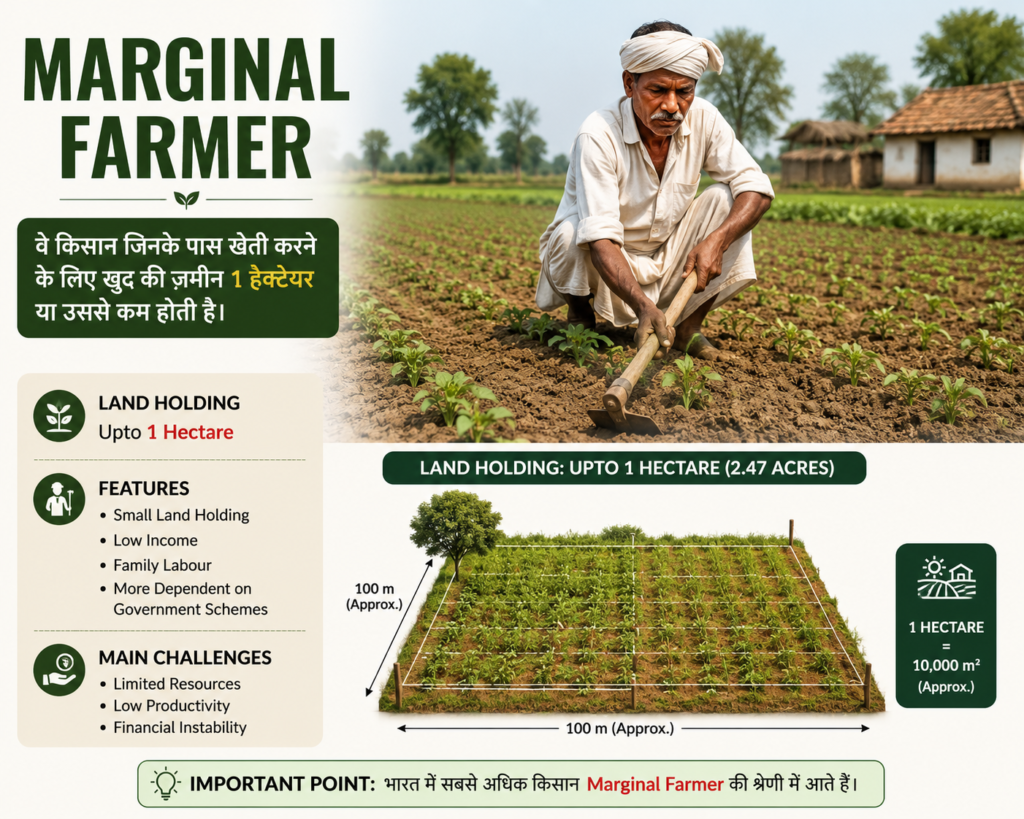
2. Marginal Farmer (सीमांत किसान)
Land Holding: Up to 1 Hectare
Marginal Farmer वे किसान होते हैं जिनके पास 1 Hectare या उससे कम खेती योग्य भूमि होती है।
India में सबसे अधिक किसान इसी category में आते हैं। कम भूमि होने के कारण इनकी income भी सीमित होती है और ये अक्सर Government Support Schemes का लाभ लेते हैं।
Key Features of Marginal Farmer
- Land Holding ≤ 1 Hectare
- Small Scale Farming
- Family Labour का उपयोग
- Low Investment Capacity
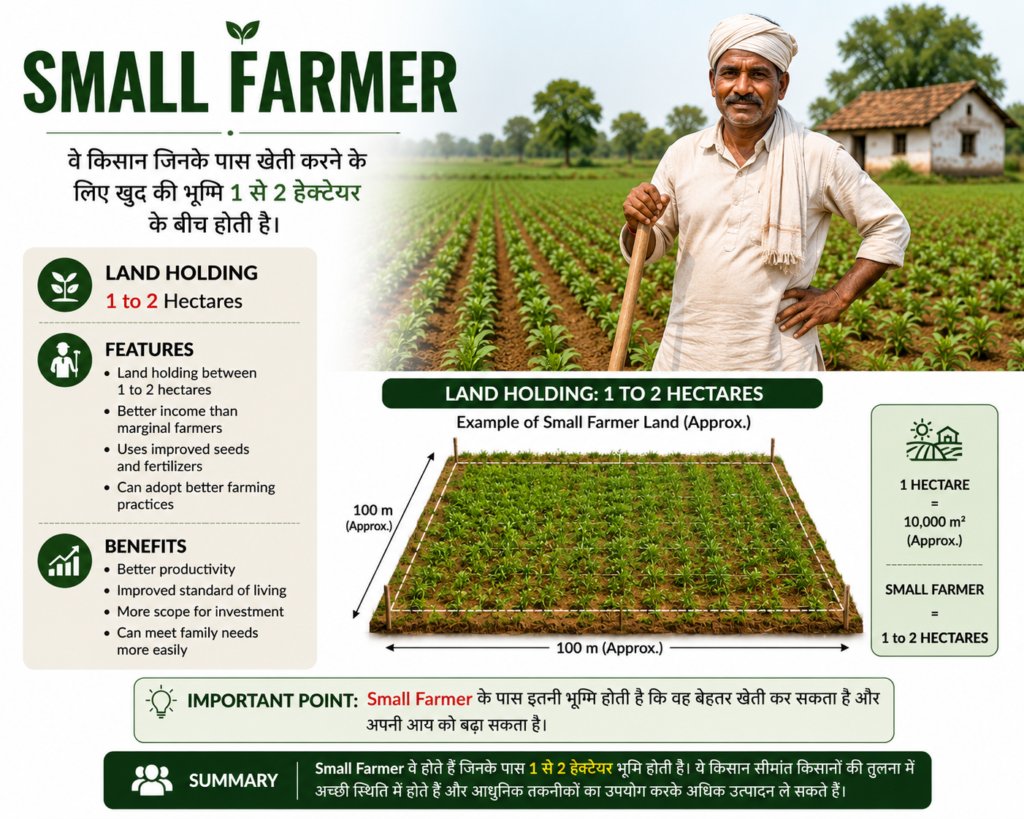
3. Small Farmer (लघु किसान)
Land Holding: 1–2 Hectares
Small Farmer वे किसान होते हैं जिनके पास 1 हेक्टेयर से अधिक और 2 हेक्टेयर तक कृषि भूमि होती है। Marginal Farmers की तुलना में इनके पास थोड़ी अधिक भूमि होती है, जिससे वे बेहतर crop planning और आधुनिक खेती की कुछ तकनीकों को अपना सकते हैं।
Small Farmers भारत की कृषि व्यवस्था का एक महत्वपूर्ण हिस्सा हैं। ये किसान खाद्यान्न, दलहन, तिलहन, सब्जियों और बागवानी फसलों का उत्पादन करते हैं। उचित तकनीक, सिंचाई और सरकारी योजनाओं का लाभ मिलने पर ये अपनी आय में अच्छा सुधार कर सकते हैं।
Key Features of Small Farmer
- Land Holding: 1–2 Hectares
- Better production than marginal farmers
- Limited use of agricultural machinery
- Eligible for government subsidies and schemes
- Can adopt improved seeds and fertilizers
Also Read this article Difference Between B.Sc Agriculture vs B.Tech Agriculture Engineering
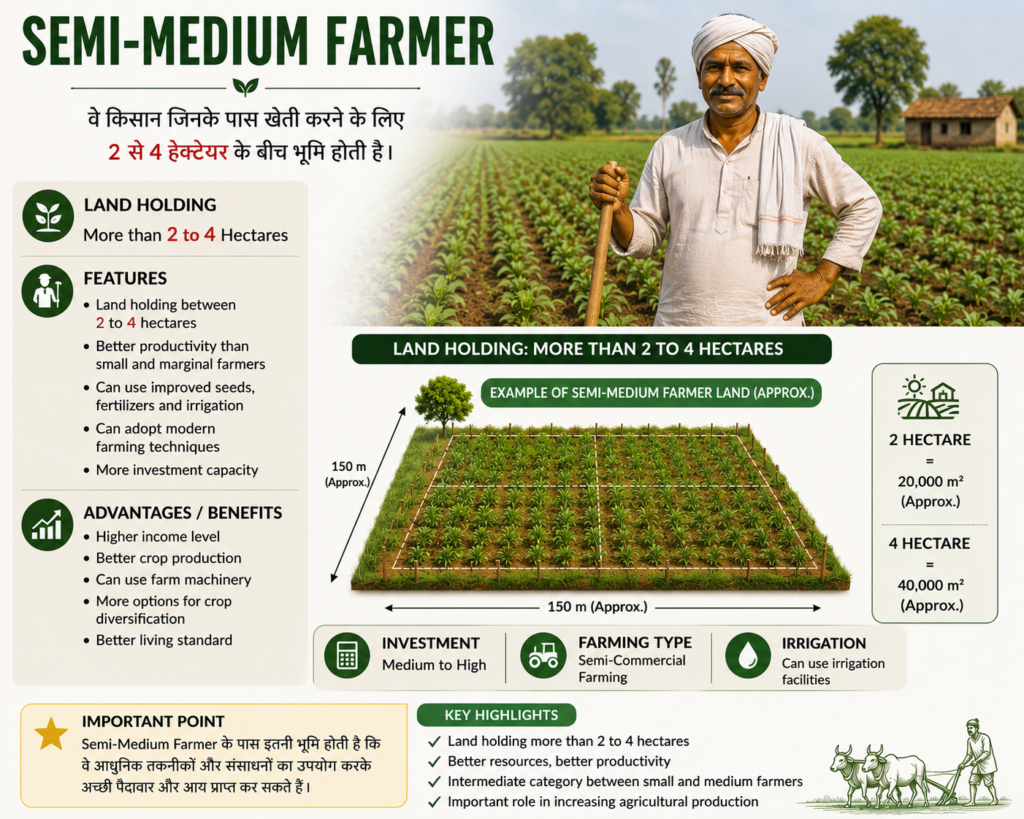
4. Semi-Medium Farmer (अर्ध-मध्यम किसान)
Land Holding: 2–4 Hectares
Semi-Medium Farmer वे किसान होते हैं जिनके पास 2 हेक्टेयर से अधिक और 4 हेक्टेयर तक कृषि भूमि होती है। इनके पास पर्याप्त भूमि होने के कारण ये आधुनिक कृषि तकनीकों का उपयोग अपेक्षाकृत अधिक कर सकते हैं।
यह किसान उन्नत बीज, सिंचाई प्रणाली, कृषि यंत्रों और वैज्ञानिक खेती के तरीकों को अपनाकर अच्छी गुणवत्ता एवं अधिक उत्पादन प्राप्त कर सकते हैं।
Key Features of Semi-Medium Farmer
- Land Holding: 2–4 Hectares
- Medium-scale farming
- Better irrigation facilities
- Higher production capacity
- Good investment capability
5. Medium Farmer (मध्यम किसान)
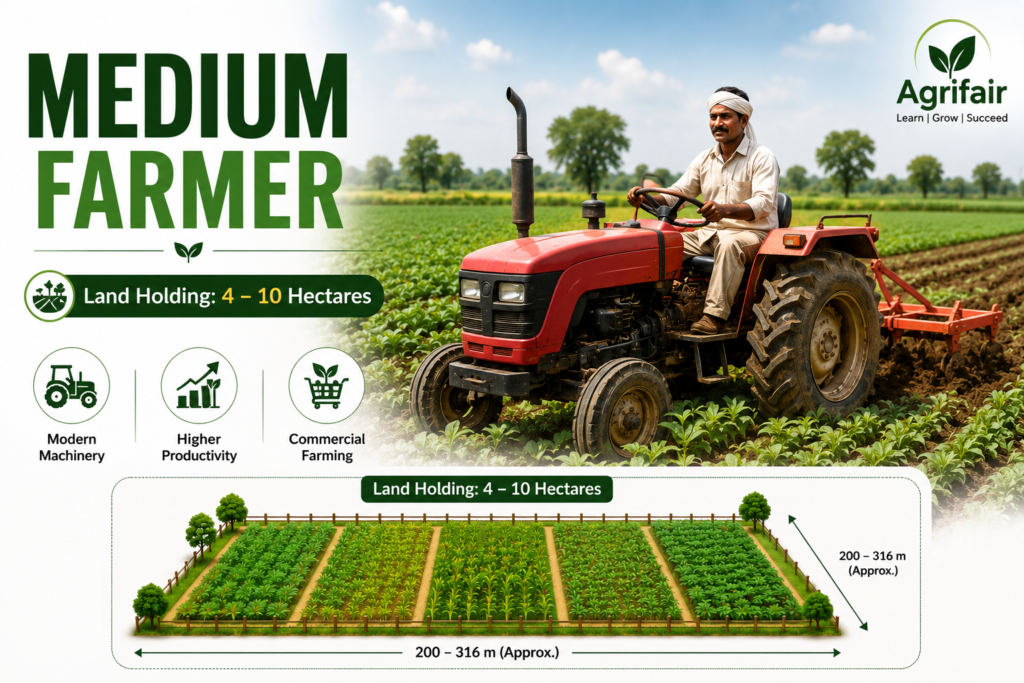
Land Holding: 4–10 Hectares
Medium Farmer वे किसान होते हैं जिनके पास 4 हेक्टेयर से अधिक और 10 हेक्टेयर तक कृषि भूमि होती है। इनके पास अपेक्षाकृत अधिक भूमि होने के कारण ये commercial farming, mechanized farming और advanced agricultural technologies का उपयोग कर सकते हैं।
Medium Farmers अक्सर tractor, cultivator, seed drill और harvesting machines जैसी आधुनिक कृषि मशीनों का उपयोग करते हैं, जिससे उत्पादन और लाभ दोनों बढ़ते हैं।
Key Features of Medium Farmer
- Land Holding: 4–10 Hectares
- Commercial farming
- Modern agricultural machinery
- High productivity
- Better financial stability
Exam Note: कुछ State Board या पुराने Agriculture Notes में Medium Farmer की सीमा 4–6 Hectares भी दी गई है। इसलिए परीक्षा में अपने syllabus के अनुसार उत्तर लिखें।
6. Large Farmer (बड़े किसान)
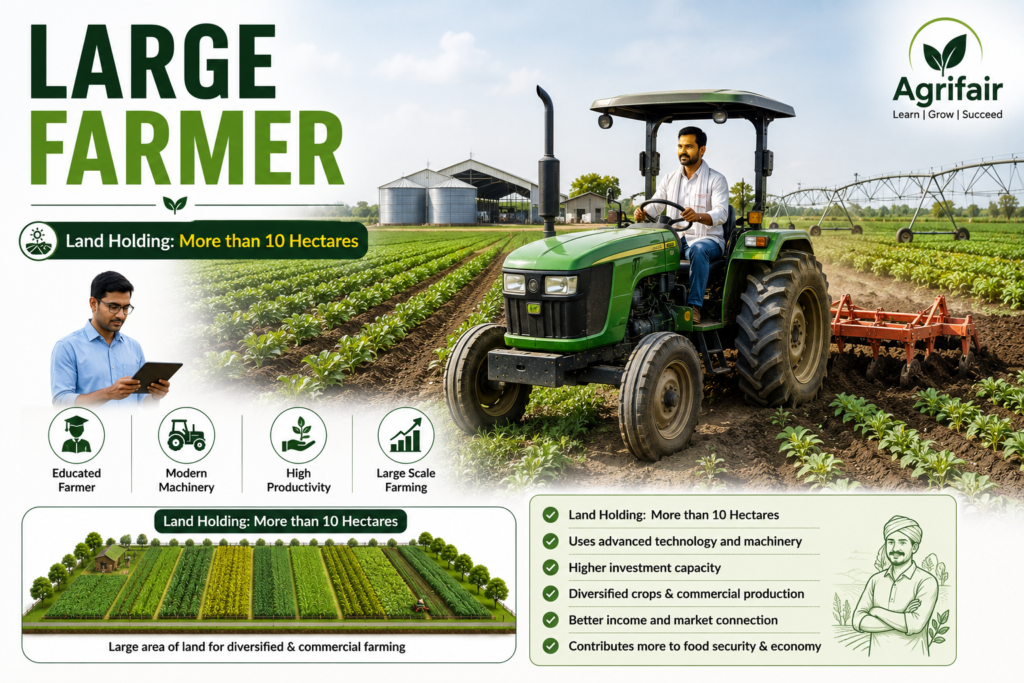
Land Holding: More than 10 Hectares
Large Farmer वे किसान होते हैं जिनके पास 10 हेक्टेयर से अधिक कृषि भूमि होती है। ये किसान बड़े पैमाने पर खेती करते हैं और आधुनिक कृषि तकनीकों, मशीनों तथा irrigation systems का व्यापक उपयोग करते हैं।
Large Farmers अक्सर commercial crops, horticulture, seed production, dairy farming और agribusiness जैसी activities में भी निवेश करते हैं।
Key Features of Large Farmer
- Land Holding: More than 10 Hectares
- Large-scale commercial farming
- High investment capacity
- Use of modern technology
- Better market access
Note: यदि आपकी पुस्तक या बोर्ड में Large Farmer की सीमा 6 Hectares से अधिक दी गई है, तो उसी classification का पालन करें।
Importance of Farmers Classification
Farmers Classification in India केवल एक academic topic नहीं है, बल्कि यह भारत की कृषि व्यवस्था का एक महत्वपूर्ण आधार है।
Government Schemes
इस classification की मदद से सरकार निम्न योजनाओं का लाभ सही किसानों तक पहुँचाती है—
- PM-KISAN
- Kisan Credit Card (KCC)
- Pradhan Mantri Fasal Bima Yojana
- Soil Health Card Scheme
- PM Krishi Sinchai Yojana
Benefits for Farmers
- Easy Agriculture Loans
- Subsidy Benefits
- Crop Insurance
- Better Training Programs
- Financial Assistance
Difference Between Different Farmers Classification in India
| Category | Land Holding | Farming Scale |
|---|---|---|
| Landless | No Land | Labour/Lease Farming |
| Marginal | Up to 1 ha | Very Small |
| Small | 1–2 ha | Small |
| Semi-Medium | 2–4 ha | Medium |
| Medium | 4–10 ha | Commercial |
| Large | Above 10 ha | Large Commercial |
Exam Point of View Farmers Classification in India
यह topic निम्न परीक्षाओं में बार-बार पूछा जाता है—
- ICAR UG Entrance Exam
- CUET Agriculture
- Class 12 Agriculture
- B.Sc. Agriculture
- Agriculture Diploma
- Agriculture Supervisor Exam
- Agriculture Officer Recruitment
- State Agriculture Competitive Exams
📌 Tip: Land Holding की limits और categories को याद रखें क्योंकि MCQs में सीधे प्रश्न पूछे जाते हैं।
Frequently Asked Questions (FAQs)
What is Farmers Classification?
Farmers Classification means dividing farmers into different categories based on the size of their agricultural land holdings.
H3: How many types of farmers are there in India?
India has six major categories of farmers:
- Landless
- Marginal
- Small
- Semi-Medium
- Medium
- Large
Who is called a Marginal Farmer?
A farmer having up to 1 hectare of agricultural land is called a Marginal Farmer.
Which category has the highest number of farmers in India?
Most farming households in India belong to the Marginal Farmer category.
Why is this topic important?
This topic is frequently asked in agriculture entrance exams, board exams, and competitive examinations.
Conclusion of Farmers Classification in India
Farmers Classification in India Based on Land Holding कृषि शिक्षा और सरकारी योजनाओं दोनों के लिए एक अत्यंत महत्वपूर्ण विषय है। किसानों को Land Holding के आधार पर Landless, Marginal, Small, Semi-Medium, Medium और Large Farmer की श्रेणियों में वर्गीकृत किया जाता है। यह वर्गीकरण सरकार को योजनाओं का बेहतर क्रियान्वयन करने में मदद करता है और किसानों को उनकी आवश्यकता के अनुसार सहायता उपलब्ध कराने में भी महत्वपूर्ण भूमिका निभाता है।
यदि आप Class 12 Agriculture, ICAR, CUET Agriculture, B.Sc. Agriculture या किसी अन्य कृषि प्रतियोगी परीक्षा की तैयारी कर रहे हैं, तो इस topic की categories और land holding limits को अच्छी तरह याद रखें। यह आपके exam और practical understanding दोनों के लिए उपयोगी रहेगा।
🌾 Thank You for Reading!
Thank you for reading our article on “Farmers Classification in India Based on Land Holding.” ❤️
हमें उम्मीद है कि इस article से आपको Landless, Marginal, Small, Semi-Medium, Medium और Large Farmers के classification को समझने में मदद मिली होगी। Agrifair.in पर हमारा उद्देश्य आसान भाषा में quality agriculture study material उपलब्ध कराना है, ताकि आपकी exam preparation और concepts दोनों मजबूत हो सकें।
💬 Share Your Feedback
क्या यह article आपके लिए helpful रहा? नीचे Comment करके अपनी राय जरूर बताएं। आपका feedback हमें और बेहतर content बनाने के लिए प्रेरित करता है।




Pingback: Bihar STET Agriculture Unit1: Ecology & Its Relevance to Man